Showing posts with label know your ingredients. Show all posts

Saturday, 9 August 2014

Know Your Ingredients: Mustard


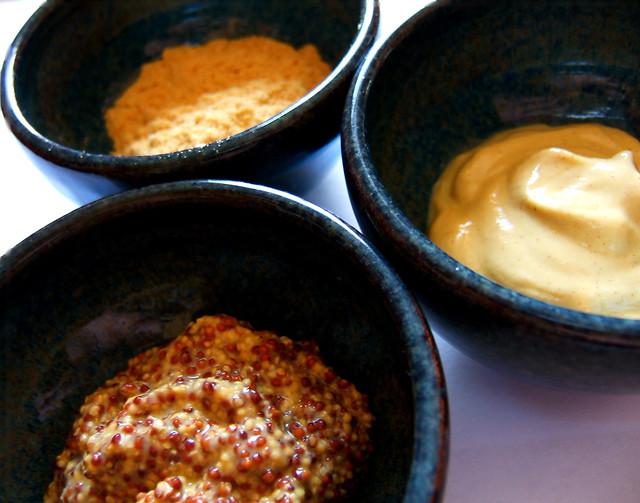
Three types of mustard from Flickr via Wylio
© 2006 Jessica Spengler, Flickr | CC-BY | via Wylio
There’s a zillion kinds of mustards on the market these days. You can chose from hot and spicy to a mild honey mustard -- beer, wine or deli mustard. It’s actually one of the most widely used condiments in the world. It can be made from the ground seeds of the yellow mustard plant, brown (Indian) mustard plant or black mustard. These seeds, either ground cracked or sometimes whole, are combined with lemon, salt, lemon juice, wine or other liquids to make that familiar paste that we use to spice up our hotdogs, salads, soups and marinades. Mustard preparations are found in cuisines around the world including India, Africa, the Mediterranean, the Americas and Europe.

The first recipe we have for mustard comes from the famous forth (or fifth) century Roman cookbook “Apicus”. It calls for ground mustard seed to be mixed with unfermented grape juice, also know as “must”, along with pepper, caraway, dill, celery, thyme, onion, honey, vinegar fish sauce and oil. This “burning must” – mustum ardens in Latin – was eventually shortened and gave us the word “mustard”. Romans considered it a great accompaniment to roast boar but also found it useful to cure toothaches, stimulate appetite and digestion, clear the sinuses and increase blood circulation. Try to get all that out of a bottle of ketchup!!

Dry yellow mustard powder is actually very mild in taste. The heat of a mustard preparation doesn’t come about until it’s mixed with a liquid. Ground yellow mustard makes for a milder preparation than either black or brown Indian mustard. Additionally, the temperature of the preparation makes a difference. Really fiery mustards are made with cold water and small amounts of mild acids, such as vinegars. Milder mustards are made with hot water and stronger acids that break down the “heat” of the sauce.

Commercial “yellow mustard”, also known as “American mustard” has a large amount of turmeric added to give it its characteristic yellow colour. Dijon mustard was first made in the Dijon region of France in the mid 1800s when a cook substituted verjuice (an unfermented grape juice) for vinegar in a classic recipe. Today, Dijon mustards are mostly made with white wine over verjuice and very little of it is produced in Dijon France anymore. Interestingly enough, even the mustards made in Dijon are made almost exclusively with Canadian grown mustard seeds. Canada produces between 70 and 80 percent of the world’s exported mustard seed, mostly in Alberta and Saskatchewan.

In addition to being a great and versatile condiment, mustard also performs the useful task of being an inexpensive emulsifier. 

Mustard has an extremely long shelf life, both in seed, powdered or prepared form. Mustard has natural antibacterial properties and does not require refrigeration as it does not support molds, mildews or harmful bacterial growth. Prepared mustards will lose their pungency over time. The flavour elements that were released with the addition of liquid can evaporate so keep your mustard in a tightly sealed container and out of direct sunlight. 

Friday, 8 August 2014

Know Your Ingredients: Garlic

Garlic growing in a container. Image from Creative Commons
In quantities large or small, garlic packs a punch, and is one of the most versatile culinary additions around. Garlic is used in many savoury dishes to add flavour. It’s one of humanities oldest aromatic additions to cuisine, having been in use for some 7000 years, It’s an integral part of Asian, Mediterranean, African and European cuisine. Garlic was used as both food and medicine when the Great Pyramid was being built in the Giza plateau. Greek and Roman physicians prescribed it as a cure-all for everything from parasitic infections to pulmonary tuberculosis.

The ancient physicians weren't too far off the mark. Both animal studies and small trials on human subjects show that garlic has good cardiovascular benefits by reducing blood cholesterol and triglyceride levels. It also has an effect on blood clotting rates and people taking prescribed anticoagulants, such as Warfin, should check with their doctor or pharmacist to see if there are any concerns about drug interaction.

Some quick tips about this wonderful seasoning:

  • Raw garlic is the strongest of all its forms. If you’re looking for a milder taste, it can be blanched, sautéed or roast – each technique giving a different nuance to the overall taste.
  • Elephant garlic, the great huge bulbs we can buy at grocery stores, isn't garlic at all. It’s actually part of the Lily family. 
  • Scapes are the curly green cutting from the maturing garlic plant. They are slightly milder than garlic cloves, but still with the same flavour. They are nice raw in hummus, spreads, or salads and add nice flecks of colour. Try our Garlic Scapes and White Bean dip 
  • Fresh garlic is a rare find. It is garlic used within the first week or two after it's harvested from the ground. Most garlic that we purchase is cured by letting it dry for several days. This allows it to be stored longer. Garlic should be kept in a cool dark place (and used before it moulds or begins to sprout.)
  • Keep in mind that garlic burns quickly in a frying pan, so cook it at a low temperature and/or for a short time before adding more ingredients. If garlic overcooks, it takes on a very bitter taste that will permeate the entire dish. 
  • Powdered garlic is simply cured garlic that has been further dehydrated, then powdered. It tends to be MORE pungent than cured garlic bulbs, so use sparingly, and taste your dish often.


If you find yourself with some extra bulbs and have some room to garden, growing garlic is easy peasy! Every single clove you plant will give you a whole bulb! In the fall of the year, break up a bulb of garlic into individual cloves. Simply push the clove into the soil a couple of inches, blunt end pointing down. Cover them with mulch and wait until spring. Come the warmer weather, brush away the mulch and compost when you find shoots. Once the curly scapes start winding up out of the plant, be sure to trim (and use!) them. This pushes the plant to put it’s energy into growing a nice big bulb. Harvest the remainder of the plant when the leaves turn yellow. Lay them out until the think skin around the bulb becomes papery, then store them in a cool dark place until ready to use!

Friday, 25 July 2014

Know Your Ingredients: Balsamic Vinegar

Image courtesy of Creative Commons 
Sweet, fruity, tart -- Balsamic vinegar is highly prized by the modern chef for it's capacity to "wake up" subtle flavours in salads and vegetables. 


Traditional balsamic vinegar (Aceto Balsamico Tradizionale) is a wickedly expensive ingredient. Prices can range from $50.00 for a 100 ml bottle and up, and when we say up, we’re talking in the $500 a bottle range. It’s been passed from generation to generation as a family heirloom, been gifted to emperors and been included as a valuable asset in women’s dowries. As an ingredient, this is just too expensive to use willy-nilly in cooking. In fact, it is usually reserved to be sparingly drizzled on a finished dish. Why the cost? First of all, it’s an expensive condiment to make. Traditional Balsamic Vinegar is labour intensive and it’s a long time before the producer sees any return on his labour. To start, t is made from a special breed of grapes grown in Italy. The grapes are boiled in copper vessels until the volume is reduced to 30 – 50% of the original quantity. The remainder is transferred into wooden barrels and aged. Over the course of the year, some of the water component of the vinegar evaporates through the pores of the wood, concentrating the vinegar’s flavour. Every year, the vinegar is transferred to a progressively smaller barrel made from a different wood to pick up some of the flavour characteristics of that wood. The approved woods are oak, cherry, chestnut, mulberry, acacia, juniper, and ash. Young balsamic vinegar is aged three to five years. Very old balsamic vinegar is a minimum of 12 years old and up to 150 years old. We can promise you that anything over 25 years old is blisteringly expensive.

Fortunately, for those of us who lack the budget to procure the traditional stuff, there are alternatives. It’s usually labelled “Balsamic Vinegar of Moderna”.  While there are no defined standard for commercial grades of balsamic vinegar, they are usually some mixture of wine vinegar, sugar, water, preservatives, caramel and flavouring agents and thickening agents such as guar gum or cornstarch to imitate the traditional vinegar’s texture. This inexpensive, easily available ingredient can be sourced in any grocery store for much lower prices than the traditional vinegar. Expect to pay between $3 and $10 a bottle. This is the stuff to splash on salads or cook with – it makes a great braising liquid.


You can also “age” it by reducing it with a little brown sugar. Gently boil ½ cup of commercial grade balsamic vinegar for 5 minutes to thicken it. Continue cooking with 2 Tablespoons of brown sugar for another 2 minutes to further reduce the mixture until it's about half of its original volume. Remove from the heat and allow to cool -- store in the fridge in an airtight container. You’ll have about ¼ cup of the reduction that can be used in braises or dabbed on steamed vegetables. 

Friday, 18 July 2014

Know Your Ingredients: Cheese

Image courtesy of Creative Commons 
Where does one start when talking about cheese!? It's even harder to talk about it as an ingredient when it begs to simply be eaten in hunks and sometimes accompanied by a cracker...

For the purpose of this blog, I'll write about a few types of cheese, and what they're best for:

HARD CHEESES
All manner of hard cheeses (there are 100's!) are available and versatile - experiment with what you can get your hands on, and choose your fave. Hard cheeses tend to last longer in the refrigerator, as they have a lower water content than the soft cheeses. 

Mozzarella - mild, stringy, best melted on pizza or pasta (like lasagna). In Italy, it is a soft cheese, frequently made from buffalo milk and eaten the same day it's made. Here in North America, it's usually made from cow's milk. Our mozzarella has a much lower moisture content than the traditional variety. Its usually sold in vacuum packaging and can last up to a month in the refrigerator. Some of the low moisture shredded mozzarella cheeses have an even longer shelf life (in the refrigerator). 

Cheddar - Originally an English cheese from the village of Cheddar, England, this hard cheese ranges from mild to sharp to extra old. Cheddars are great for snacking and sandwiches. A good "every day" cheese, no matter the strength. Canada makes a great deal of the cheddar cheese that is available in our grocery stores. Most of it originates from Ontario. 

Parmesan - Pricey. Traditionally, Parmesan is dry and is great shaved or shaken onto pasta or salad. 


SOFT CHEESES
These are a whole different ball game and are very different from hard cheeses. Ricotta, cottage cheese, cream cheese, and mascarpone are some varieties, and are commonly used to add texture. They have a mild flavour and are sometimes even used as an ingredient in desserts. These cheeses don't keep as long as the harder cheeses and need to be used up quickly. 

GOAT & SHEEP MILK CHEESES
These have a distinct flavour and tend to be more easily tolerated by those with lactose sensitivities. Crumbled soft goat cheese is often used in a salad, or on pizza in place of mozzarella. You can add it to an omelette or slip a bit into a sandwich. 

RAW MILK VS. PASTEURIZED
This refers to treatment of milk before its made into cheese, and has to do with the bacteria within the milk. Pasteurization heats milk to a certain temperature which kills all bacteria (both good AND bad). Raw milk cheese must be aged before being safe to eat, and is often not recommended for young children or pregnant women. The majority of cheese available commercially around here have been pasteurized. Unpasteurized cheese are more commonly found in Europe, although in Quebec, they are legal to sell and quite popular. 

Cheese has a lot to offer, no matter what kind you choose. Try kinds that fit your budget, and decide what works best for your meals.  

Friday, 11 July 2014

Know Your Ingredients: Potatoes


The humble potato is the fourth largest food crop grown in the world, just behind corn, wheat and rice. It is also the number one vegetable crop in the world and features prominently in the cuisines of Eastern Europe. We’ll be adding some of our favourite potato recipes over the coming weeks.

Potatoes have an undeserved reputation for providing nothing but empty, starchy calories. The Too often, they are deep-fried in oil or smothered in high fat foods like butter and sour cream which contributes a great deal to their “unhealthy” reputation. Take away the added fats and the potato emerges as a healthy, low calorie, high fibre part of our diet. In addition, one medium sized potato provides nearly one-third of the body’s daily requirement for Vitamin B6 which is used to build cells and many of the chemicals needed by the body, including the brain.

Potatoes are often sold in plastic bags at the grocery store. This remains a Kitchen-pixie pet peeve as plastic bags, even if they have holes in it, encourage moisture to build up which rots the potatoes. If you buy potatoes in a plastic bag, transfer to an open potato bin or a paper (or burlap if you can find it) bag when you get home. Potatoes should be stored in a cool, dark place such as a closed closet or cupboard. Even room temperatures will encourage the potatoes to sprout; however, the refrigerator is not where you want to put your potatoes. Under refrigerator conditions, the starch in potatoes is converted to sugar and they will taste funny. Also, try to store them away from the onions as the gases each vegetable emit will reduce the quality of the other.

In the grocery store, look for potatoes that are firm and relatively smooth without any signs of sprouting or green discolouration. The green tinge to the skin is a sign that the potato has been exposed to sunlight and may have produced a chemical called solaine that gives potatoes a nasty, bitter taste and can be poisonous if eaten in quantity. If you can (and it’s getting harder to all the time), avoid purchasing “pre-washed” or “already cleaned” potatoes. First, they are more expensive per pound than potatoes with the dirt still intact. Secondly, washing removes a protective layer on the potato skin which allows bacteria to spoil the potato. Finally, you are going to wash them anyway so why pay extra for this unnecessary “service”.

Most of the nutritional “goodies” of the potato are found in the skins so if possible, cook them with the skins on and eat the lot. Scrub the potato well under cool running water and remove any obvious areas of damage with a small sharp knife. If you need to peel them, use a vegetable peeler to remove as little of the skin as possible. Potatoes darken if they are cut and exposed to air so peel them just before cooking or put them in a pot of clean water until you’re ready to cook.

Types of Potatoes


1.       Baking potatoes: also called starchy potatoes, floury potatoes, jacket potatoes, Idaho potatoes. These potatoes tend to be long in shape and have a coarse, cork like or netted texture to their skins. They have a high starch content and cook up with a light, fluffy texture. They’re idea for baking, mashed potatoes or French fries. Some of the names you’ll see on these potatoes are Russets, Idaho Russets, or in New Brunswick, Netted Gems.

2.       Boiling potatoes: also known as waxy potatoes, fingerling potatoes. These potatoes tend to be round in shape with thin skins. They hold their shape better when cooked which means your potato salad won’t turn into a bowl of mush. These are ideal for use in soups, stews, potato salad, roasting, and barbequing. Boiled and mashed, they tend to be lumpy instead of smooth and creamy. Names you’ll see for these potatoes is round white, round red, red potatoes, salad potatoes.

3.       General purpose potatoes: these are the “middle ground” when it comes to starch content. These are moister than baking potatoes and still hold their shape when boiled. Common varieties include Yukon Gold and Peruvian Blue, Kennebec, and Katadhin.  They can be baked, mashed or fried but will not bake up with the same fluffy lightness as the bakers.

4.       New potatoes: (also called early potatoes in Britain). These aren’t really a separate variety. An immature, small potato of any variety is a “new potato”. They have thin, easily eaten skins. There hasn’t been time for them to convert sugar into starch and they have a very high moisture content. As a result, they do not store as well as fully grown mature potatoes, so try to use these ones up within a week of purchase.  They make a good boiling potato but will be disappointing if baked or fried.


Monday, 30 June 2014

Know Your Ingredients: Garlic Scapes

Image courtesy Creative Commons 

Brandi and Brianna, the garden coordinators here at Our Greener Village Community Food Centre, just came into the kitchen with an armful of garlic scapes – an ingredient that might be somewhat unfamiliar to our readers. To that end, we bring you the basics on this easily grown ingredient and some ideas of what to do with it.

Garlic scapes are the flower stalk from the hard-neck garlic plant. This shoot is sent up about a month after the first leaves appear. As they mature, this stalk get curly and then straightens out as the bulb continues to mature. Since most gardeners are growing garlic for the bulbs, they don’t want the plant diverting energy away from that project and into flowers. Most gardeners cut the scapes off and either compost them or bring them into the kitchen.

When the scapes are very young and tender, they can be chopped raw and added to a salad or used as a topping like one would use chopped green onions. The more mature scapes are tougher and can be sautéed lightly and used in any dish that would benefit from the addition of garlic. Many people add them to pasta dishes or use them to make pesto.  

If you have more than you can use, they will keep for about a month in the refrigerator crisper area in a paper bag. They also freeze but will lose their flavour gradually over 2 or 3 months.

Enjoy them while you can – these are an early summer treat.